
Quick answer: A mirror quality control checklist works best as an incoming-inspection workflow you agree on before production, not a list you improvise at the dock. Write down your defect classes, sampling method and pass or fail rules in the RFQ, then inspect every delivery the same way: carton and packaging first, then glass face and reflection, edges, backing, frame finish, hardware and, for powered units, a power-on test.
This guide is for Canadian buyers: retailers, hospitality and property managers, designers, contractors and importers who receive mirrors at a warehouse, a store or a job site. If you are preparing an order, you can request a wholesale mirror quote from Salkala Decor and attach your inspection requirements to the request.
Agree the Method Before Production
Most quality disputes are not about whether a mirror is bad. They are about whether the buyer and the supplier were using the same definition of bad. Before production starts, agree in writing on three things.
- Defect classes. Group problems by consequence. A common approach is critical (a safety risk or a unit that cannot be used), major (a visible fault a customer would return) and minor (a small cosmetic variation most customers would not notice). Define each class with examples for your product.
- A sampling approach. You can inspect every unit on a small order, or inspect a sample from each carton or pallet on a large one. Buyers and suppliers should agree on a recognized method and the acceptance limits in advance. This article does not set a number for you, because the right limits depend on your channel and the risk to your customers.
- What happens on failure. State whether a failed lot is re-inspected, sorted, replaced or credited, and who pays for what.
Put the agreed wording in your purchase order or RFQ so there is one document to point to.
The Incoming-Inspection Workflow
Use the same order of steps each time so results are comparable between deliveries, sites and staff.
- Before opening. Photograph the carton count, labels and any visible damage while cartons are still sealed. Note the carrier, date and time.
- Open and sample. Pull the units you plan to inspect from different cartons and different positions on the pallet.
- Inspect against the specification. Compare each unit with your drawing or approved sample using the checklist below.
- Record. Log the unit, defect, class and a photo with a ruler or label in frame.
- Decide. Accept, hold or reject according to the rules you agreed.
- Report fast. File any claim with photos promptly. Salkala Decor customers file replacement claims in the dashboard with one photo upload.
The Mirror Inspection Checklist
The table below turns the main inspection points into checks you can use at a warehouse, on a retail floor or at a job site. Add your own tolerances and limits.
| Inspection point | What to look for | How to check it |
|---|---|---|
| Glass face and reflection | Scratches, pits, bubbles, waviness, distorted reflection, haze, fingerprints that will not wipe off | View under even light at a slight angle, then straight on; hold a straight-edged object near the surface and watch how its reflection bends |
| Glass edges | Chips, sharp edges, shells, cracks at corners | Look along each edge and run a gloved finger gently over it |
| Silvering and backing | Dark spots, black or grey edges, peeling or lifting backing, scratches in the coating | Check the rear and the edge of the glass; look for spots that appear only when the unit is lit from behind |
| Frame finish | Uneven colour, scratches, bare metal, drips, gaps at joints, mismatch against the approved reference | Compare with the reference in daylight-balanced light, and photograph both together |
| Size and shape | Overall size, frame width, corner shape and squareness | Measure in centimetres and inches against the drawing and note the tolerance you agreed |
| Hardware | Missing, loose or mismatched hangers, cleats, screws and anchors; unclear instructions | Count the parts per unit and test a hanger fit on a sample piece |
| Packaging and labels | Crushed corners, loose inner wrap, wrong labels, mixed SKUs in a carton | Compare the carton label with the PO and the unit inside |
| Power-on test (LED and anti-fog units) | Flicker, dead sections, uneven light, dimming not working, anti-fog pad not warming evenly, damaged cable or plug | Power on at the receiving point, cycle brightness, and leave running for a few minutes |
Glass, Edges, Silvering and Backing in More Detail
Mirror faults are easiest to see under good light and from more than one angle. Check the glass face first, then the edges, then the back.
- Reflection test. A good mirror shows straight lines as straight. Waves or bends usually point to a glass or mounting issue.
- Edge test. Edges should be clean and consistent, with no chips or rough areas.
- Silvering test. Look for dark spots, discoloured edges or lifting coating, which can start small and spread over time, especially in damp rooms.
- Protective backing. Some mirrors have a protective film on the back. If your project needs a particular safety-glass specification, write that specification into the purchase order and inspect against it, rather than assuming it.
Frame, Hardware and Packaging
Frame defects are usually the first thing a customer sees. Keep an approved reference and photograph it beside the production unit. For hardware, count the parts per unit and test fit one on a sample piece before the pallet moves to the sales floor.
For packaging, the box is part of your quality control. Check corners, inner wrap, labels and whether the unit moved inside the carton. Salkala Decor packs units double-boxed and corner-protected for transit, and photographing damage on receipt makes any claim much easier to resolve. For more on transit protection, see this guide to mirror packaging and freight damage prevention in Canada.
Powered Mirrors: LED and Anti-Fog Checks
If you buy backlit LED or anti-fog mirrors, plan a power-on check at receiving. Test a sample from each carton or lot: switch on, cycle through any dimming or colour settings, check for flicker or dead sections, and leave the unit on for a few minutes. Inspect the cable, plug or driver for damage.
Electrical approval and labelling requirements vary by province, project and channel. Confirm what applies to your project with your own electrician, advisor or the authority having jurisdiction before you install or resell powered mirrors. Some Canadian retail channels also ask for bilingual English and French labelling or packaging; if that is relevant, confirm your own channel rules and agree the label content in the PO.
Put It in Your RFQ
A short inspection clause saves time later. Include these items in your RFQ or PO:
- Drawing, approved sample or reference photos, with sizes in centimetres and inches
- Defect classes and examples
- Sampling method and acceptance limits you and the supplier agreed
- Safety-glass or backing specification, if your project needs one
- Photo QC expectations before shipment
- Packaging and label requirements, including language if your channel requires it
- Power-on test expectations for LED and anti-fog units
- Claim steps, photo requirements and the time window for reporting damage
Questions to Ask a Supplier About Quality Control
- How are units inspected before shipment, and can I see photos of every unit?
- Can we agree defect classes and a sampling method in writing?
- What is your stated defect rate, and how is it measured?
- How are units packed, and what do you do about corners and edges?
- What happens when a unit arrives damaged, and how fast is the replacement or credit?
- Can I approve a drawing before custom production?
- How are LED and anti-fog units tested before they ship?
What Salkala Decor Offers Wholesale Buyers
- Family-owned, founded 2025. A real person replies within one business day.
- Minimum 50 units per design, with volume pricing that improves at 100, 250, 500 and 1,000+ units. Ask for the current price sheet.
- Signed digital quote within 24 hours with per-unit pricing, MOQ options, lead time and freight cost.
- Lead times: stock SKUs 2 to 3 weeks from PO to your door; custom designs 4 to 6 weeks after drawing approval; rush available on request.
- Quality: every SKU is QC-inspected before shipment, with photo QC so you can see every unit before it leaves. The stated defect rate is under 0.5%. Any unit that arrives damaged is fully replaced, with replacement or credit within 5 business days of a claim.
- Packed for transit: double-boxed and corner-protected.
- Custom sizes, shapes, finishes and LED options, with a technical drawing for your approval before custom production. Private label and OEM are welcome.
- Free delivery across Canada and the USA to a warehouse, retail location, Amazon FBA or 3PL. Salkala handles sourcing, fabrication, QC, export documentation, freight, customs and last-mile delivery.
- Private dashboard from day one to place POs, track shipments, download invoices and packing lists, approve drawings and file replacement claims with one photo upload.
- Payment: 50% deposit on PO acceptance and 50% before shipment, by wire, ACH or credit card. Net-30 is available from the third order onward.
Need a Few Pieces First?
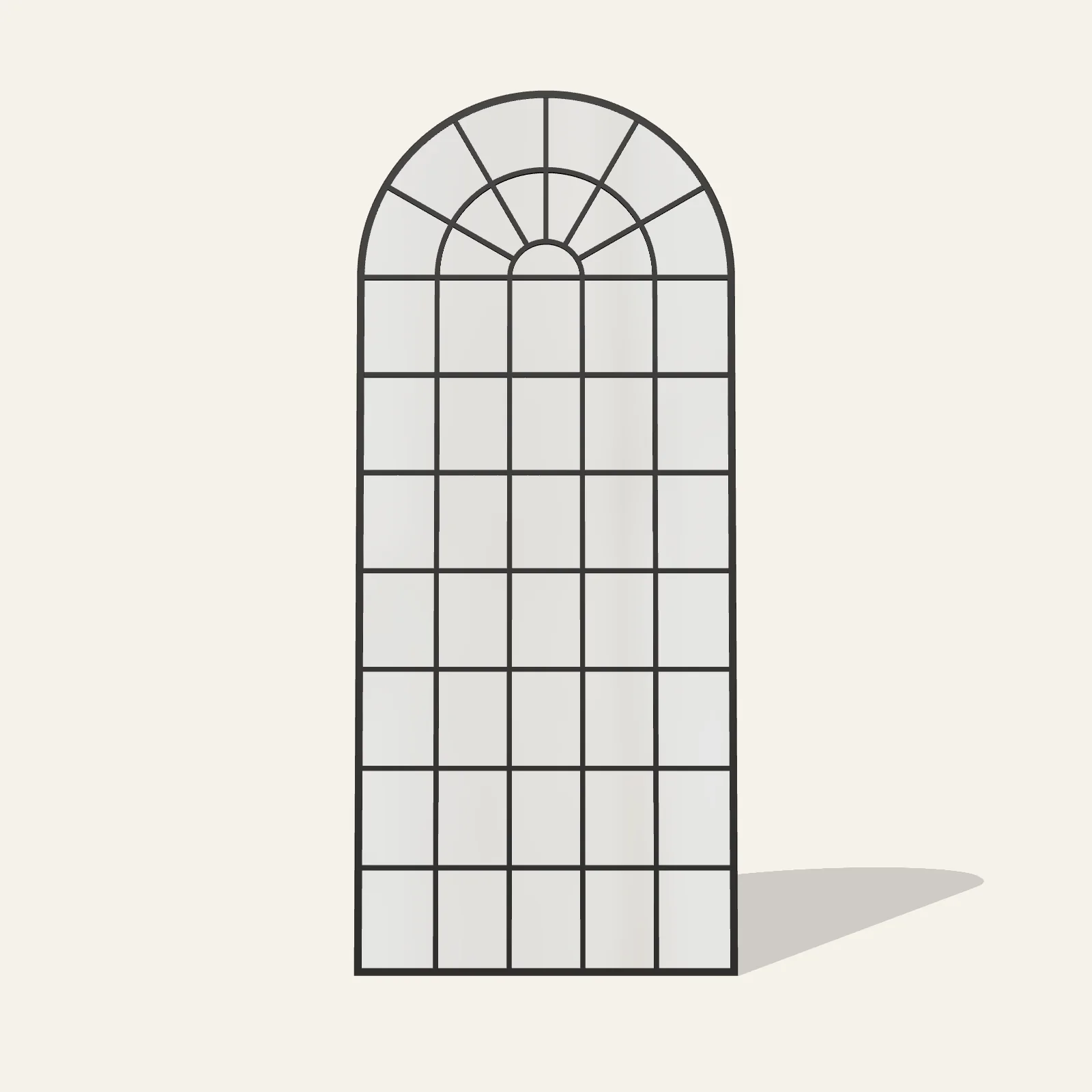
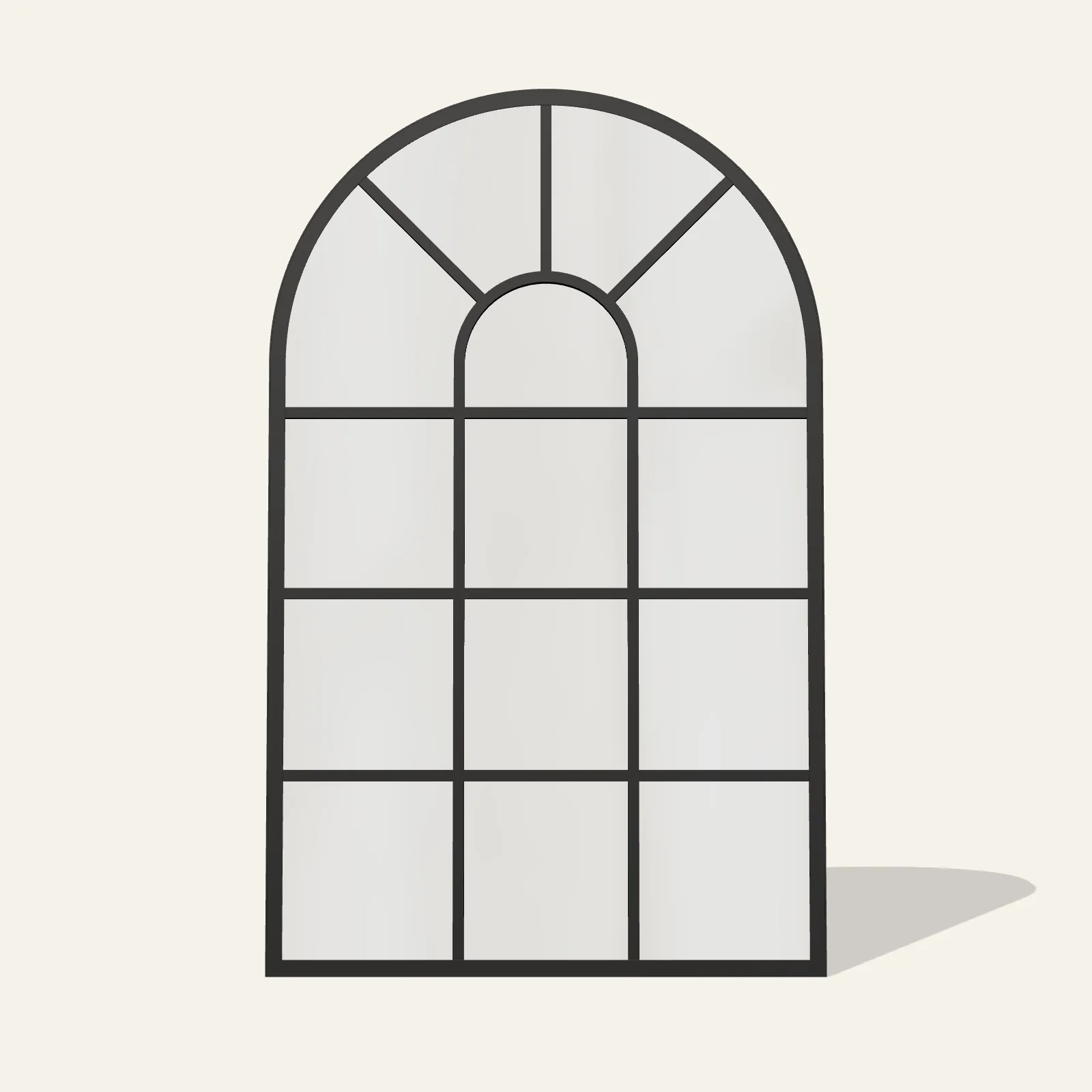
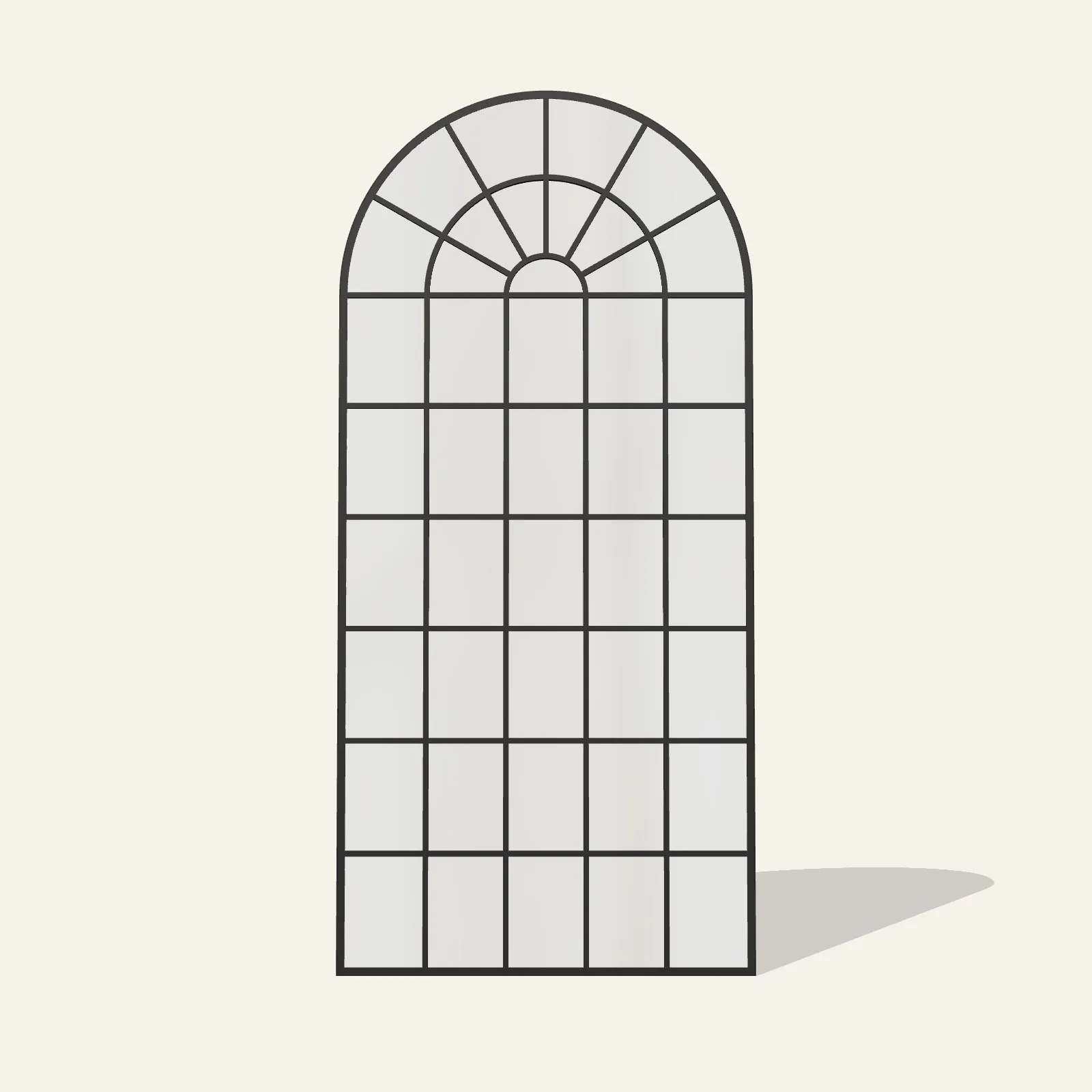
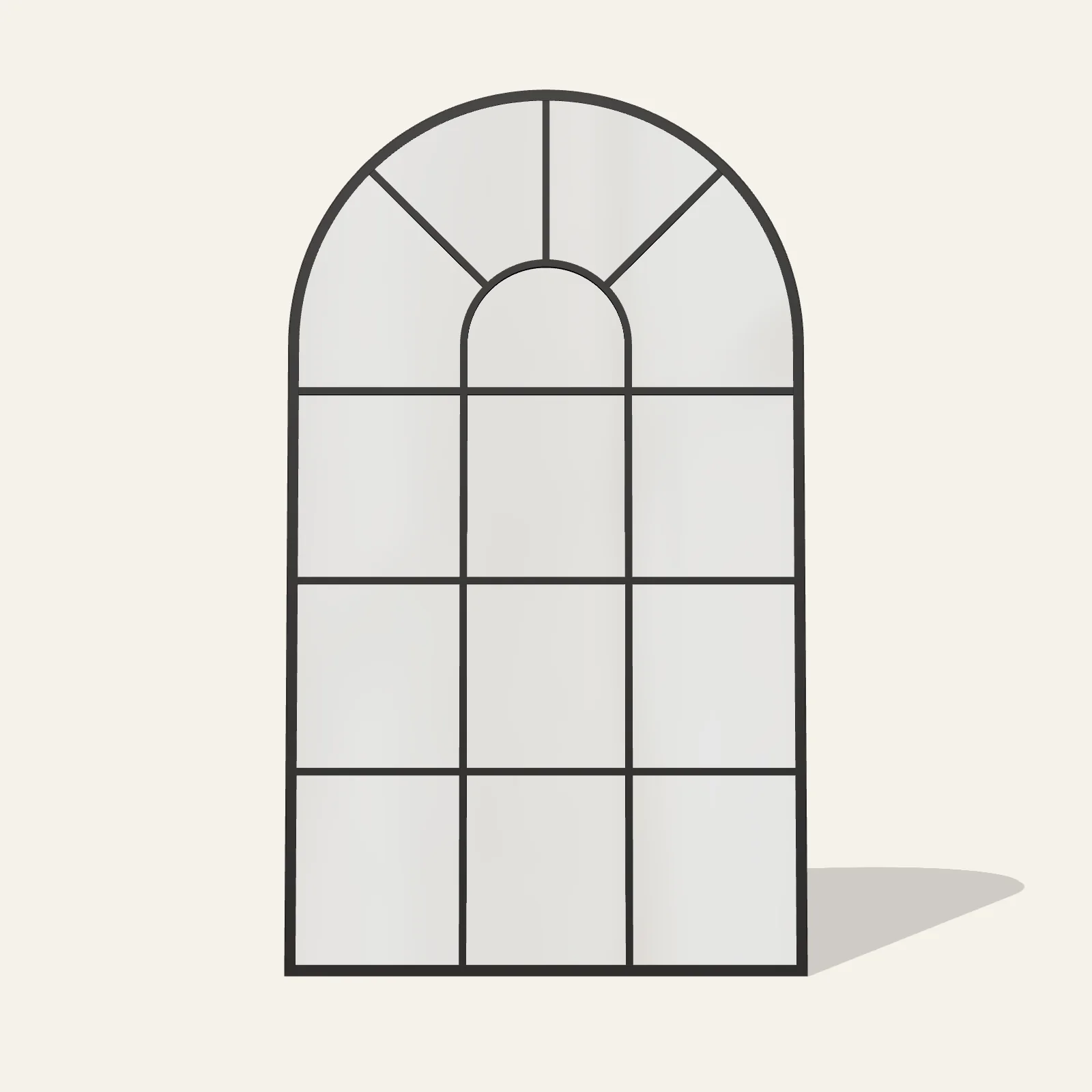
If you want to inspect a stock piece against your own checklist before a larger order, look at the 32×20 Inch (81 x 51 cm) arched windowpane mirror or the 48×28 Inch (122 x 71 cm) black arched windowpane mirror. For more on what to check when ordering in volume, see what to check when buying commercial mirrors in bulk in Canada.
Next Step
Write your inspection clause, attach your drawing or reference, and send it with your quantities. When you are ready, submit a wholesale quote request to Salkala Decor, or email salkaladecor@gmail.com with your sizes, finishes and destination.