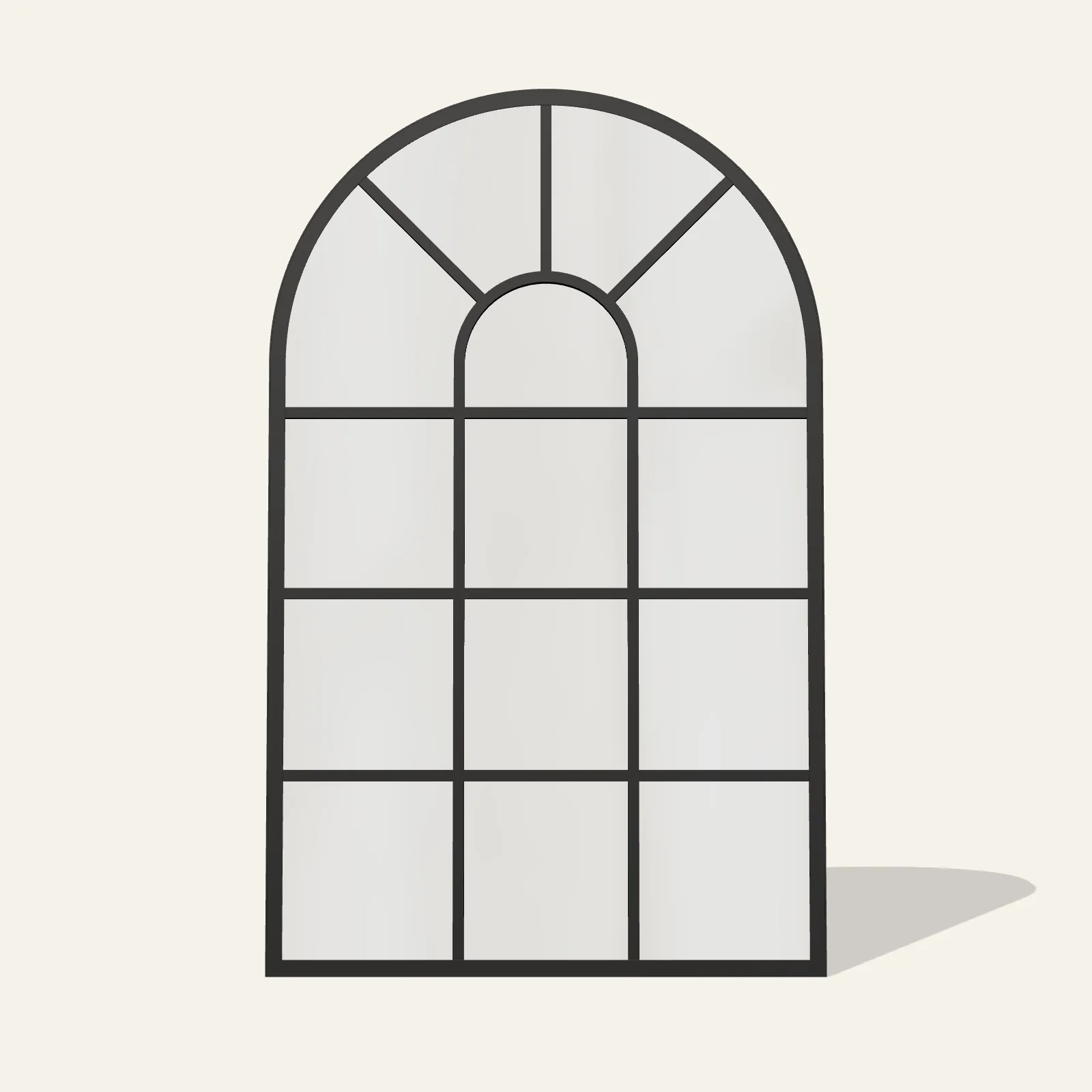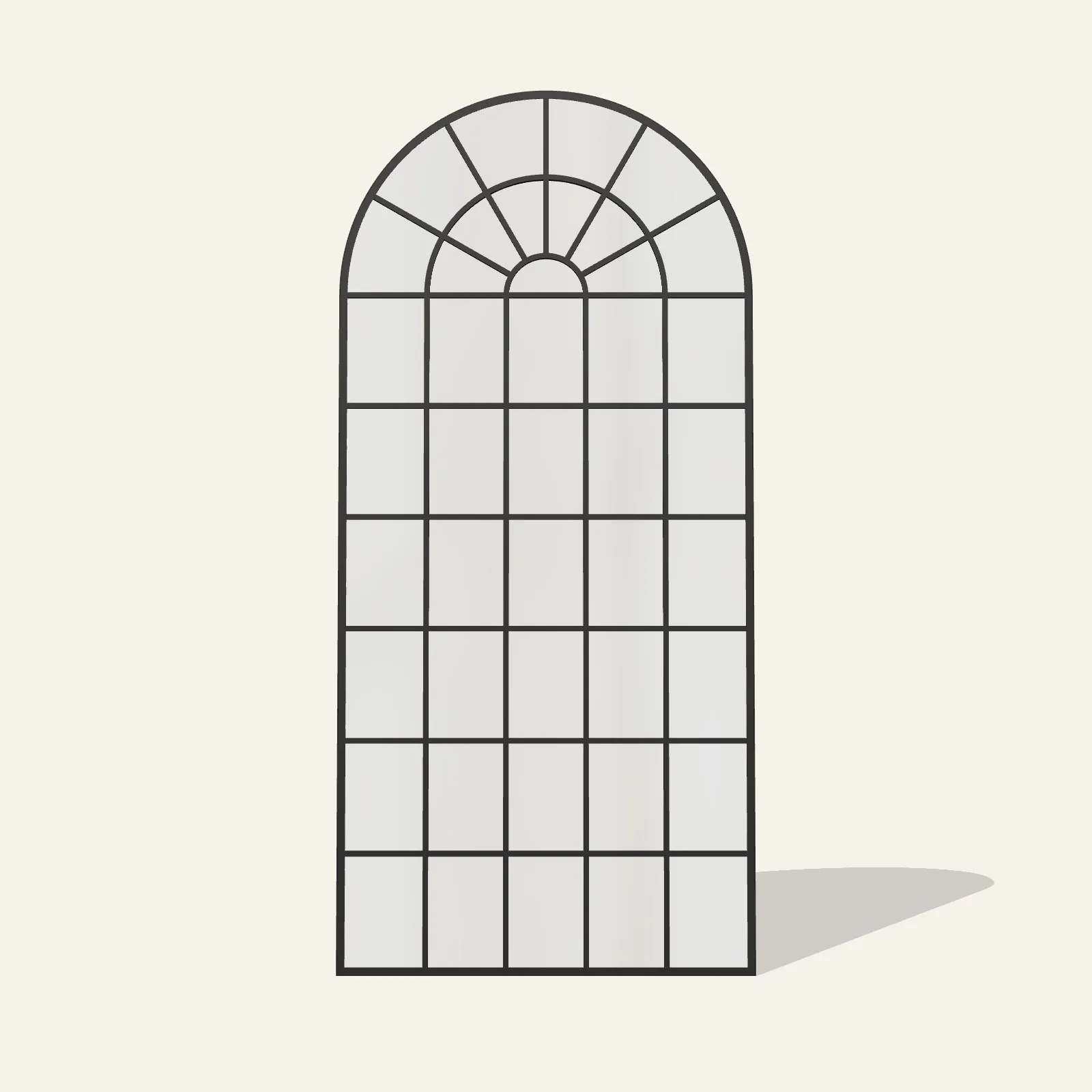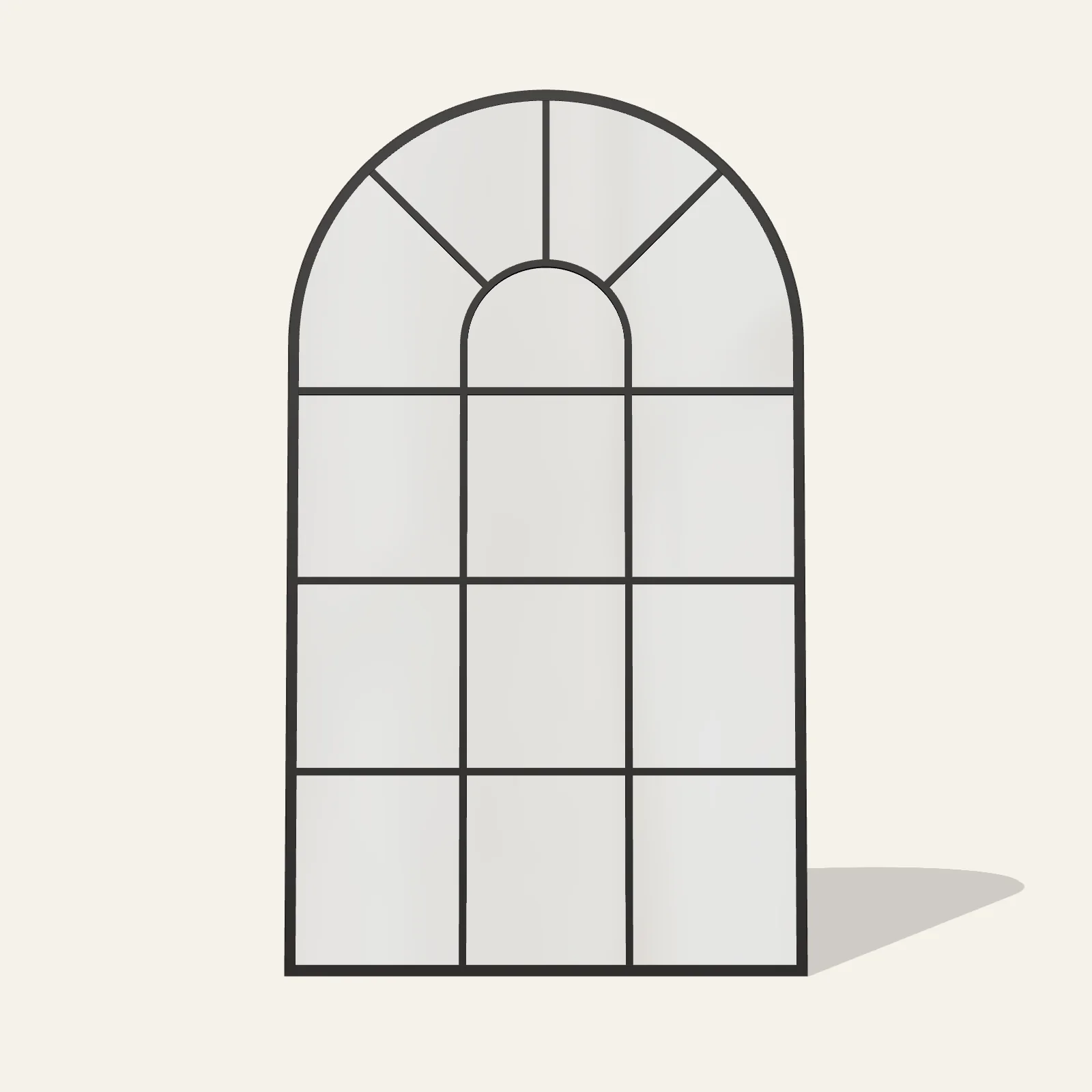

Quick answer: Japandi style blends Japanese simplicity with Scandinavian comfort: a calm palette of warm white, greige, clay and charcoal, low natural-wood furniture, lots of open space and a few handmade, textured pieces. To get the look in a Canadian living room this winter, clear one wall, lower the furniture, use warm light at about 2700K and choose one quiet focal point. A matte black arched windowpane mirror works especially well, because its thin black grid echoes a shoji screen while the glass bounces the little daylight you get on short December days. Size it at about two-thirds to three-quarters the width of the furniture below: a 48 x 28 in (122 x 71 cm) mirror above a 100 to 110 cm (39 to 43 in) bench or console, or a pair of 32 x 20 in (81 x 51 cm) mirrors above a 150 to 165 cm (59 to 65 in) low sideboard.
Japandi is one of the most searched interior styles in Canada, and it suits our winters better than most. It's warm without being busy, it photographs beautifully in low winter light and it gives you a calm backdrop for the holidays that doesn't need to be packed away after Boxing Day. Here's what Japandi really means, how it differs from Scandinavian decor, eight living room ideas, a mirror size chart in centimetres and inches and three worked examples.
What Is Japandi Style?
Japandi combines two design traditions that share a love of simplicity and natural materials:
- From Japanese design: wabi-sabi (the beauty of the handmade and imperfect), low furniture, clean lines, darker woods and a deliberate amount of empty space.
- From Scandinavian design: hygge-style comfort, soft textiles, light-reflecting surfaces and practical, family-friendly pieces.
The result is a room that feels calm and lived-in at the same time: fewer objects, each one chosen for its texture, shape or use.
Japandi vs. Scandinavian: the key differences
| Element | Scandinavian | Japandi |
|---|---|---|
| Colour | Bright white, pale grey, soft pastels | Warm white, greige, clay, olive and charcoal |
| Wood | Pale birch, ash and light oak | Light oak mixed with walnut or dark-stained wood |
| Furniture height | Standard height, often on slim legs | Low and grounded, close to the floor |
| Accents | Cozy layers and plenty of textiles | Fewer pieces, matte black lines, stoneware and paper |
| Feeling | Bright and cozy | Calm, quiet and grounded |
If you prefer the lighter, airier version, our Scandinavian decor ideas for Canadian winters cover that look room by room.
A Japandi Colour Palette for a Canadian Winter
Choose a warm base, because cool greys can feel cold when the sky is grey for weeks:
- Walls: warm white, soft greige or a pale limewash-style finish.
- Large pieces: oatmeal, sand or stone-coloured linen and boucle.
- Accents: clay, rust or olive in cushions and ceramics.
- Contrast: a few matte black lines, such as a mirror frame, a lamp base or picture frames, to keep the room from looking washed out.
8 Japandi Living Room Ideas
1. Lower the furniture
Choose a low sofa, a low coffee table and a long, low bench or console. A lower skyline makes the walls look taller and leaves room for one strong piece above.
2. Leave one wall almost empty
Japandi depends on negative space. Pick a single focal wall with one mirror or one piece of art, and leave the others mostly bare.
3. Use a windowpane mirror as a "shoji" focal point
A matte black arched windowpane mirror reads like a paper-screen window: a fine black grid, a soft arch and nothing ornate. Hang it across from or beside a window so it reflects daylight and the winter view, not the TV or a busy doorway.
4. Layer warm, low light
Use paper or linen shades, warm white bulbs at about 2700K and two or three light sources at different heights. In much of Canada the sun sets before 5 p.m. around the winter solstice on December 21, so evening light sets the mood for most of the day.
5. Mix two wood tones
Pair light oak with one darker wood, such as walnut, for depth. Repeat each tone at least twice in the room so it looks intentional.
6. Add handmade texture
A stoneware vase, a linen throw, a jute or wool rug and a woven basket bring the wabi-sabi side of the style. Choose matte, slightly irregular finishes over glossy ones.
7. Hide the clutter
Closed storage keeps surfaces clear. Boots, toques and mitts belong in a closed cabinet by the door, not on the living room bench.
8. Bring in winter branches
Instead of many plants, use one arrangement: cedar or pine sprigs in a low bowl, or a few bare branches in a vase on the far side of the room.
Japandi Mirror Size Chart (cm and inches)
Choose a mirror about two-thirds to three-quarters the width of the furniture below it. Sizes are height x width.
| Japandi spot | Furniture or wall width | Mirror to hang | Mirror width vs. furniture |
|---|---|---|---|
| Small entry console or side table | 71 to 81 cm (28 to 32 in) | One 32 x 20 in (81 x 51 cm) | About 63 to 72% |
| Low bench or console | 100 to 110 cm (39 to 43 in) | One 48 x 28 in (122 x 71 cm) | About 65 to 71% |
| Long low sideboard | 150 to 165 cm (59 to 65 in) | A pair of 32 x 20 in with a 10 cm (4 in) gap, 112 cm (44 in) in total | About 68 to 75% |
| Bare wall in an entry or bedroom | 91 cm (36 in) of clear wall or more | One 64 x 30 in (163 x 76 cm) hung vertically | A full-length check |
Because Japandi furniture sits low, leave a slightly bigger gap than usual, about 20 to 25 cm (8 to 10 in), between the furniture and the bottom of the frame. That keeps the mirror at a comfortable viewing height while still linking it visually to the piece below.
Three Worked Examples
Example 1: a 48 x 28 in mirror above a low oak bench
The bench is 107 cm (42 in) wide and 46 cm (18 in) tall, so the 71 cm (28 in) wide mirror covers about 66% of its width. With a 25 cm (10 in) gap, the bottom of the frame sits at 71 cm (28 in) and the top of the arch at 193 cm (76 in), leaving 51 cm (20 in) below a 244 cm (8 ft) ceiling. Add a stoneware bowl of cedar at one end and a small paper-shade lamp at the other, both well below the frame.
Example 2: a pair of 32 x 20 in mirrors above a long low sideboard
The sideboard is 160 cm (63 in) wide and 51 cm (20 in) tall. Two 51 cm (20 in) wide mirrors with a 10 cm (4 in) gap take 112 cm (44 in), about 70% of its width. With a 20 cm (8 in) gap, the bottoms sit at 71 cm (28 in) and the tops at 152 cm (60 in), which keeps the pair at seated eye level for a low sofa across the room.
Example 3: a tall mirror in a Japandi entry
On a 91 cm (36 in) wide wall beside the closet, hang a 64 x 30 in mirror vertically with its bottom 25 cm (10 in) above the floor. The top lands at 188 cm (74 in), tall enough for a head-to-toe check in your winter coat. A slim bench and a closed boot cabinet nearby keep the entry calm.
Hang every mirror into studs or with anchors rated well above its weight, and use two fixing points so it stays level.
A Japandi Take on the Holidays
- One small tree or a branch arrangement: a slim tree or a few branches in a heavy vase, decorated with wood, paper or dried-orange ornaments.
- Warm white only: plain warm white string lights, not multicolour, so the room stays calm.
- Natural greenery on the furniture: lay cedar along the bench or sideboard under the mirror, never on the frame itself.
- Keep it after Boxing Day: take down the ornaments and leave the greenery, linen and warm lights up as winter decor through February.
Planning to shop the Boxing Day sales for a new sofa or sideboard? Measure the wall and the mirror first, so the new piece is about one and a third to one and a half times the mirror's width.
Our Mirror Picks for a Japandi Room
These Salkala Decor arched windowpane mirrors have a slim matte black powder-coated metal frame with fine spokes fanning across the arch above a grid of panes, safety-backed safety glass and wall-mounting hardware included. Salkala Decor offers free delivery across Canada and a 1-year frame warranty.
- Above a low bench or console: the 48 x 28 in (122 x 71 cm) large black arched windowpane mirror suits a 100 to 110 cm (39 to 43 in) piece.
- For entries and pairs: the 32 x 20 in (81 x 51 cm) black arched window mirror works alone above a small console or as a pair above a long sideboard.
- For a full-length check: the 64 x 30 in (163 x 76 cm) tall black arched windowpane mirror fits a bare entry or bedroom wall.
The Short Version
Japandi style is Japanese calm plus Scandinavian comfort: a warm neutral palette, low furniture in two wood tones, handmade textures, warm light and plenty of empty space. Give the room one quiet focal point, such as a matte black arched windowpane mirror whose grid echoes a shoji screen, sized at about two-thirds to three-quarters of the furniture below: a 48 x 28 in (122 x 71 cm) above a 100 to 110 cm bench, or a pair of 32 x 20 in above a 150 to 165 cm sideboard. Keep holiday decor natural and warm white, and leave the calm winter layer up long after Boxing Day.
About this guide: written by the Salkala Decor team using widely used interior design guidelines and the published dimensions of our own mirrors. Measurements are rounded for planning; always check your walls and fixings before installing.