
Quick answer: The best accent wall ideas pair one strong wall treatment with one strong mirror. Pick the wall people see first or the wall behind your main piece of furniture, finish it with dark paint, board and batten, picture frame molding, limewash or a quiet wallpaper, and then hang an arched mirror that is about two-thirds to three-quarters the width of the furniture below it. Use a 48 x 28 in mirror above a 36 to 42 in console or dresser, a pair of 48 x 28 in above an 80 to 90 in sofa, and a 64 x 30 in on a narrow wall between windows. Plan the mirror before you paint or install trim, so the panels, the bays and the mirror line up. Start this week and the wall is dry, hung and ready for Thanksgiving guests on November 26.
Most accent wall ideas stop at the paint color or the paneling pattern. But an accent wall is a backdrop, and what hangs on it decides whether it looks designed or just painted. A black arched windowpane mirror is one of the easiest finishing pieces because its thin frame reads like a window against any color, and its glass bounces light off a dark wall that would otherwise swallow it. Here's how to choose the wall, which treatments work best with a mirror, a size chart, worked hanging heights and the mistakes to avoid.
Which Wall Should Be the Accent Wall?
Choose one wall per room, and choose it for what it already does:
- The first wall you see. In an entryway or living room, the wall that faces the front door or the room's doorway is the natural focal point.
- The wall behind the main piece of furniture. Behind the sofa, the bed, the dining buffet or an entry console. The furniture anchors the wall and gives the mirror something to sit above.
- A wall with few interruptions. Skip walls broken up by several doors, windows or a thermostat. An accent wall needs a clear field of color or trim.
- Not the TV wall, if you want a mirror. A mirror on the same wall as a TV competes with it, and a mirror facing the TV reflects glare. Keep the mirror on a different wall from the screen.
7 Accent Wall Ideas That Look Better With a Mirror
1. Dark paint with a black frame
Charcoal, deep green, navy, plum or a chocolate brown makes a room feel cozy, and a matte black frame on a dark wall reads as a soft, tone-on-tone outline. The glass becomes the bright spot, which is exactly what a dark accent wall needs. Use a satin or eggshell finish so the wall wipes clean around the frame.
2. White or greige with high contrast
If you'd rather keep the walls light, paint the accent wall a shade or two deeper than the rest of the room, or leave it warm white and let the black frame do the work. The fan-spoke arch and grid read as crisp graphic lines.
3. Board and batten
Board and batten adds shadow lines and texture, but the battens stand proud of the wall, so a mirror hung across them can rock. The fix is to plan the bay widths around the mirror so it hangs flat inside one bay. See the worked example below.
4. Picture frame molding
Rectangular molding boxes turn a plain wall into a classic paneled one. Center one box behind the mirror and leave 4 to 6 inches of wall between the frame and the molding on every side so the mirror looks deliberately framed.
5. Limewash or textured paint
Limewash gives a soft, cloudy finish that changes with the light. A mirror on a limewash wall catches the window light and makes the texture glow from across the room, especially on short November afternoons.
6. Wallpaper with a quiet pattern
A small, low-contrast pattern such as grasscloth, a fine stripe or a tonal botanical works best behind a windowpane mirror. Busy, large-scale prints fight the grid. Hang the wallpaper first, then cut a small X at each screw point rather than tearing it.
7. Two-tone wall with a chair rail
Paint the lower third of the wall a deeper color below a chair rail at about 32 to 36 inches, and keep the upper wall lighter. Hang the mirror on the lighter upper section so the frame sits on a clean field of color.
Accent Wall Mirror Size Chart
Measure the furniture on the accent wall, or the clear wall itself, and aim for a mirror about two-thirds to three-quarters of that width. Sizes are height x width.
| Accent wall setup | Furniture or wall width | Mirror to hang | Mirror width vs. furniture or wall |
|---|---|---|---|
| Narrow wall between windows or a short entry wall | 36 to 45 in of clear wall | One 64 x 30 in hung vertically | About 67 to 83% |
| Console table or dresser | 36 to 42 in | One 48 x 28 in | About 67 to 78% |
| Buffet, sideboard or dining wall | 60 to 66 in | A pair of 32 x 20 in with a 4 in gap (44 in total) | About 67 to 73% |
| Sofa or long credenza | 80 to 90 in | A pair of 48 x 28 in with a 4 in gap (60 in total) | About 67 to 75% |
| Bare feature wall with no furniture | 12 to 13 ft (144 to 156 in) | Three 64 x 30 in with 8 in gaps (106 in total) | About 68 to 74% |
| Wood slat wall or a rental you can't drill | Any | A 70 x 30 in on its floor stand, in front of the wall | Stands on the floor, no screws in the paneling |
How High to Hang a Mirror on an Accent Wall
Above furniture, leave 6 to 10 inches between the furniture and the bottom of the frame. On a bare wall, put the center of the mirror at about 57 to 60 inches from the floor. On a very tall wall, keep the top of the arch at least 6 inches below the ceiling.
Worked example: board and batten on a 10 ft wall
Your wall is 120 inches wide and you plan four vertical battens, each 3 1/2 inches wide (a 1x4), at both ends and in between. That's 14 inches of batten, leaving 106 inches for three bays of about 35 1/3 inches each. A 48 x 28 in mirror centered in the middle bay leaves about 3 2/3 inches of flat wall on each side, so it hangs flat with no battens behind it. A 64 x 30 in also fits, with about 2 2/3 inches each side. If you'd planned five bays instead, each would be under 20 inches wide and too narrow for either mirror.
Worked example: a pair of 48 x 28 in mirrors above a sofa on a dark wall
The sofa is 84 inches wide and 33 inches tall at the back. A pair of 48 x 28 in mirrors with a 4 inch gap is 60 inches wide, about 71% of the sofa. With an 8 inch gap above the sofa, the bottoms sit at 41 inches and the tops of the arches at 89 inches. On an 8 ft (96 in) ceiling that leaves 7 inches above; on a 9 ft (108 in) ceiling, 19 inches.
Worked example: a 32 x 20 in mirror inside picture frame molding
On a bare entry wall, center a 32 x 20 in mirror at 60 inches: the bottom sits at 44 inches and the top at 76 inches. With a 6 inch margin all around, the molding box runs from 38 to 82 inches high and is 32 inches wide. On an 8 ft ceiling that leaves 14 inches of wall above the box.
Paint, trim and hang in the right order
- Tape a kraft-paper template the size of the mirror on the wall and mark the hanger points.
- Lay out battens or molding around the template, not the other way round.
- Install trim and paint. Let the paint dry fully according to the can before anything touches it, and avoid taping over fresh paint.
- Hang the mirror into studs where you can, or use the included wall anchors and screws. For board and batten, screw through the flat wall inside the bay, not through a batten. Our guide to hanging a large mirror safely on drywall walks through it.
- Level it, then style the furniture below.
Accent Wall Ideas by Room
- Living room: a dark accent wall behind the sofa with a pair of 48 x 28 in mirrors turns the darkest wall into the brightest. For more layouts on a big wall, see our living room wall decor ideas for a large blank wall.
- Bedroom: board and batten or limewash behind a dresser, with a 48 x 28 in centered above it, gives the room a focal wall without hanging glass over the bed.
- Dining room: picture frame molding behind the buffet with a pair of 32 x 20 in mirrors doubles the candlelight at Thanksgiving dinner.
- Entryway: a two-tone wall or a single molding box with a 32 x 20 in mirror gives guests a place to check their coats and smiles on the way in.
- Home office: a deep green wall behind the desk with a 64 x 30 in on the side wall adds depth on video calls without reflecting the window glare into the camera.
Common Accent Wall Mistakes
- Hanging the mirror across battens. The frame rocks and leaves a gap. Plan a bay at least 4 inches wider than the mirror.
- A mirror that's too small. A small mirror on a bold wall looks like an afterthought. Stay near two-thirds of the furniture's width.
- Painting after hanging. You'll cut in around the frame forever. Paint first, hang last.
- Choosing the busiest wall. A wall with two doors and a window can't hold a feature. Pick the calmest wall.
- Reflecting the wrong view. Check what the glass shows from the sofa or the doorway. A window or a lamp is good; the TV or the kitchen counter is not.
Our Mirror Picks for an Accent Wall
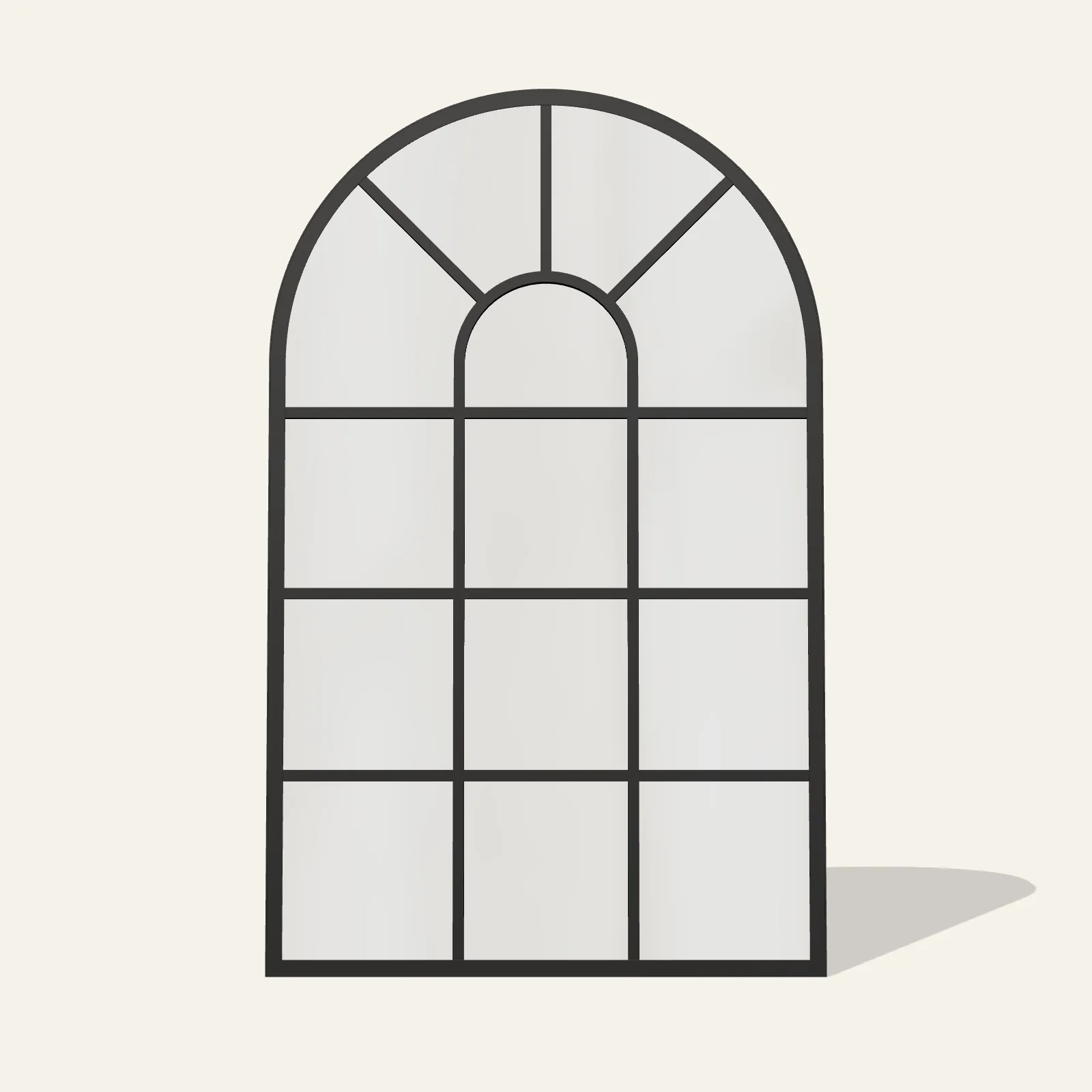
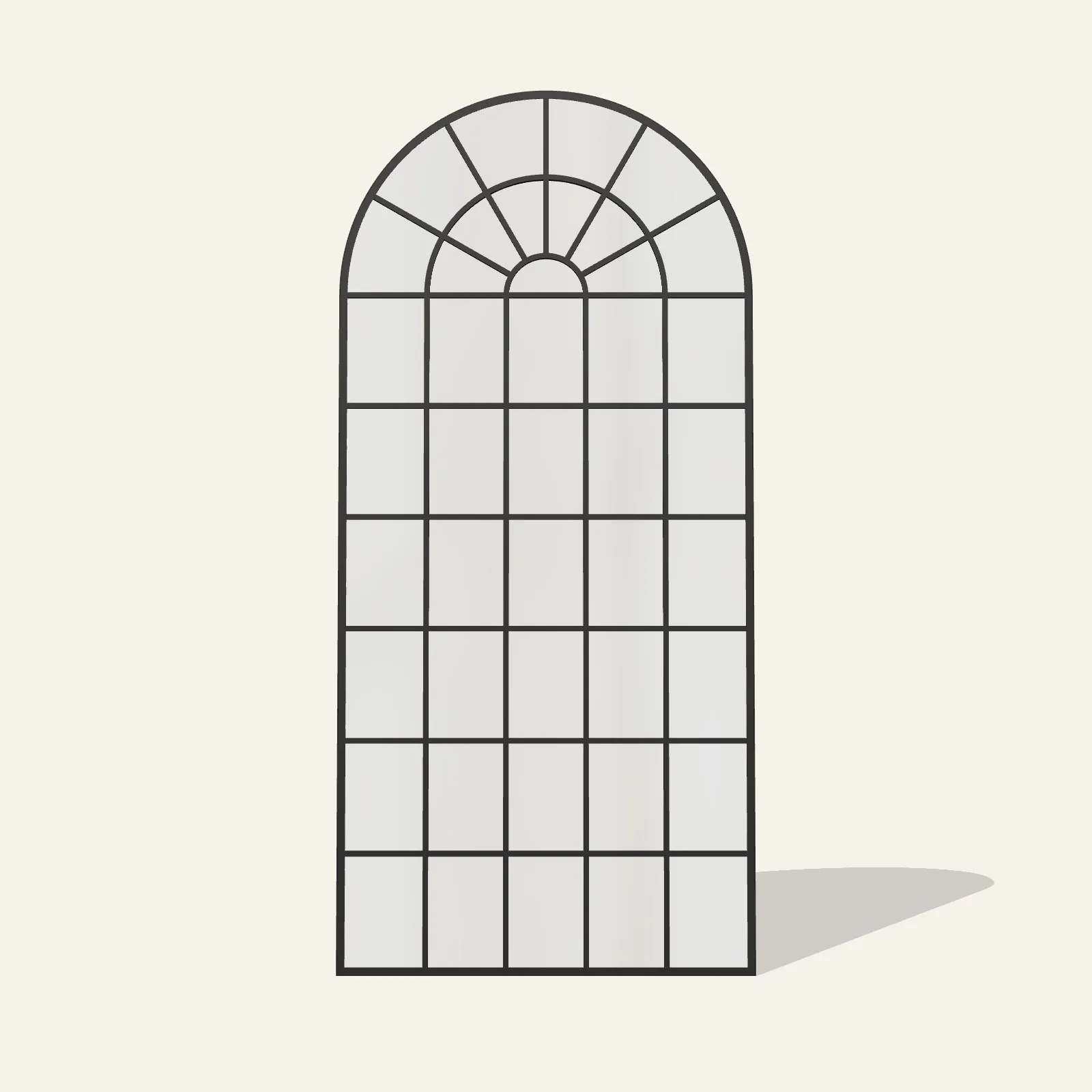
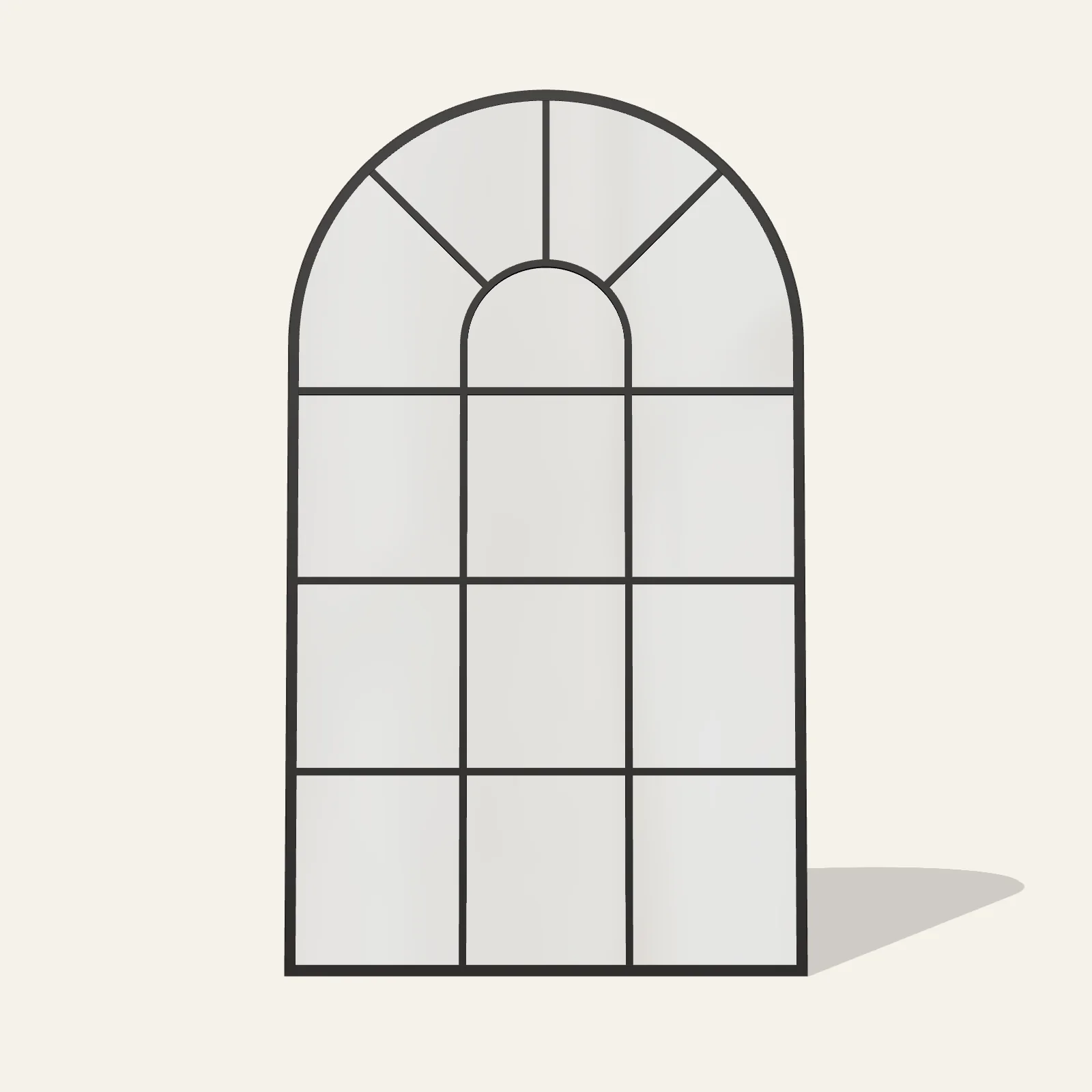
These Salkala Decor arched windowpane mirrors have a thin matte black, powder-coated metal frame with slim spokes fanning across the arch above a grid of rectangular panes, safety-backed safety glass and wall-mounting hardware included. Salkala Decor offers free delivery across the USA and Canada and a 1-year frame warranty.
- For a console, a molding box or a pair over a buffet: the 32 x 20 in black arched window mirror fits inside most picture frame molding layouts.
- Above a dresser, or as a pair above a sofa: the 48 x 28 in large black arched windowpane mirror is the most versatile accent wall size.
- For a narrow wall or a board and batten bay: the 64 x 30 in tall black arched windowpane mirror adds height and reads like a real window.
The Short Version
For accent wall ideas that look finished, choose the calmest wall people see first, give it one treatment such as dark paint, board and batten, picture frame molding, limewash or a quiet wallpaper, and finish it with an arched mirror about two-thirds to three-quarters the width of the furniture below. Plan the mirror before the trim, hang it 6 to 10 inches above the furniture, and paint first, hang last, so the wall is ready before Thanksgiving.
About this guide: written by the Salkala Decor team using widely used interior design hanging and proportion guidelines and the published dimensions of our own mirrors. Measurements are rounded for planning; always check your walls and fixings before installing.